 Edibles
  Flower
  Pre-Rolled Flower
  Vaporizers
  Concentrates
  Topicals
  Beverages
  Tinctures
  Accessories
 Understanding Cannabinoids: THC, CBD, CBN & More
THC, CBD, CBN, CBG: what do they all mean? Learn about the key cannabinoids in cannabis, what each one does, and how they work together.
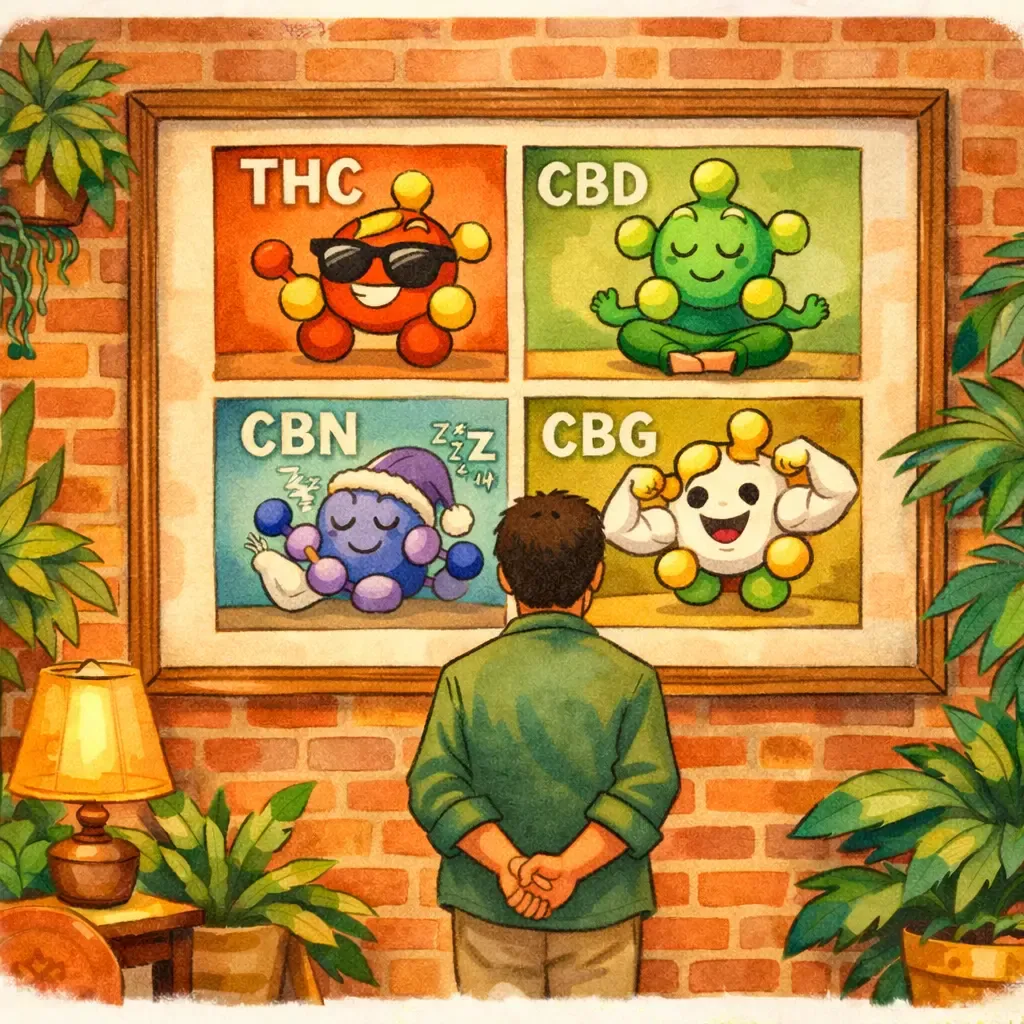
If you’ve spent any time looking at cannabis products, you’ve probably seen a lot of abbreviations like THC, CBD, CBN, and CBG, and wondered what they all mean. These are cannabinoids, the naturally occurring compounds in the cannabis plant that are responsible for the effects you feel. Understanding them is one of the most empowering things you can do as a cannabis consumer, because it helps you choose products that actually match what you’re looking for.
What Are Cannabinoids?
Cannabinoids are chemical compounds produced by the cannabis plant. Scientists have identified over 100 different cannabinoids, each with its own properties and potential benefits. When you consume cannabis, these compounds interact with your body’s endocannabinoid system (ECS), a network of receptors that helps regulate mood, pain, sleep, appetite, and more. Different cannabinoids bind to different receptors, which is why each one produces distinct effects.
THC (Tetrahydrocannabinol)
THC is the most well-known cannabinoid and the primary compound responsible for the psychoactive effects, or “high,” associated with cannabis. But THC does much more than create euphoria. It’s also been studied for its potential to help with pain relief, nausea reduction, appetite stimulation, and sleep support.
THC potency varies widely across products. Flower might range from 15% to 30% THC, while concentrates can go much higher. If you’re new to cannabis, starting with a lower-THC product gives you room to find your comfort zone without overdoing it.
What to Know
- Produces psychoactive effects (the “high”)
- May help with pain, nausea, appetite, and sleep
- Potency varies by product, so always check the label
- Start with lower-THC options if you’re new
CBD (Cannabidiol)
CBD is the second most abundant cannabinoid and has become incredibly popular for its wellness benefits, all without the intoxicating effects. CBD won’t get you high, but many people use it for relaxation, stress relief, inflammation support, and general well-being.
CBD is available on its own, but it’s also found alongside THC in many cannabis products. Some research suggests that CBD may even help moderate the effects of THC, potentially reducing anxiety or overstimulation that some people experience with higher-THC products.
What to Know
- Non-intoxicating, so it won’t get you high
- Popular for relaxation, stress relief, and inflammation
- May help moderate the intensity of THC
- Available in many product types, from tinctures to topicals
CBN (Cannabinol)
CBN is sometimes called the “sleepy cannabinoid,” and for good reason. While research is still emerging, CBN is most commonly associated with relaxation and sleep support. CBN is actually formed when THC ages and breaks down over time, which is why older cannabis tends to feel more sedating.
You’ll often find CBN in products specifically designed for nighttime use, like sleep gummies, tinctures, and capsules. It’s a great option if you’re looking for natural support for winding down at the end of the day.
What to Know
- Associated with relaxation and sleep support
- Formed naturally as THC ages
- Often found in nighttime and sleep-focused products
- Works well when combined with THC and CBD
CBG (Cannabigerol)
CBG is sometimes referred to as the “mother cannabinoid” because it’s the precursor from which other cannabinoids are synthesized in the plant. While it’s present in smaller quantities than THC or CBD, CBG has been gaining attention for its potential anti-inflammatory, antibacterial, and neuroprotective properties.
Early research suggests CBG may be helpful for inflammation, discomfort, and even mood support. As the cannabis industry continues to evolve, you’ll likely see more CBG-focused products hitting dispensary shelves.
What to Know
- Precursor to other cannabinoids, known as the “mother” compound
- Potential anti-inflammatory and antibacterial properties
- Non-intoxicating
- Increasingly available in targeted wellness products
CBC (Cannabichromene)
CBC is one of the lesser-known cannabinoids, but it’s worth knowing about. Like CBD, it’s non-intoxicating. Early studies suggest CBC may have anti-inflammatory and mood-supporting properties, and it appears to work particularly well in combination with other cannabinoids. You won’t typically find CBC-dominant products, but it contributes to the overall effect profile of full-spectrum cannabis products.
THCV (Tetrahydrocannabivarin)
THCV is a fascinating cannabinoid that’s structurally similar to THC but produces notably different effects. At lower doses, THCV is generally non-intoxicating and has been associated with appetite suppression and energy, essentially the opposite of the “munchies” that THC is known for. At higher doses, THCV can produce a clear-headed, shorter-lasting high. It’s still relatively rare in products, but it’s one to watch as the industry grows.
The Entourage Effect
Here’s where it all comes together. The entourage effect is the idea that cannabinoids, terpenes, and other plant compounds work better together than they do in isolation. When you consume a full-spectrum or whole-plant cannabis product, all of these compounds interact synergistically, potentially enhancing each other’s benefits and moderating side effects.
This is why many people prefer full-spectrum products over isolates because you’re getting the full range of the plant’s compounds working in harmony. Think of it like a band: each instrument sounds good on its own, but together they create something richer and more complete.
Reading Product Labels
Understanding cannabinoids is especially useful when you’re shopping for cannabis products. Here’s what to look for on the label:
- Total THC: The overall THC content, including THCa that converts to THC when heated. This tells you how potent the psychoactive effects will be.
- Total CBD: The overall CBD content. Higher CBD can mean a more balanced, less intense experience.
- Cannabinoid Profile: Some products list additional cannabinoids like CBN, CBG, or CBC. A diverse profile often means a more nuanced effect.
- Full-Spectrum vs. Isolate: Full-spectrum products contain multiple cannabinoids and terpenes, while isolates contain a single compound. Full-spectrum tends to leverage the entourage effect.
- Terpenes: Some labels list the dominant terpenes, which contribute to the aroma, flavor, and effects. Common terpenes include myrcene (relaxing), limonene (uplifting), and pinene (alert).
Finding What Works for You
The beautiful thing about cannabinoids is that there’s no one-size-fits-all answer. Your ideal cannabinoid profile depends on your goals, your body, and your preferences. The best approach is to start with a clear intention (relaxation, pain relief, creativity, sleep) and then work with a knowledgeable budtender to find products that align with what you’re looking for.
At Yerba Buena, our team is always happy to walk you through the options and help you understand what’s on the label. Stop by our Cobble Hill shop and let’s find your perfect match together.


